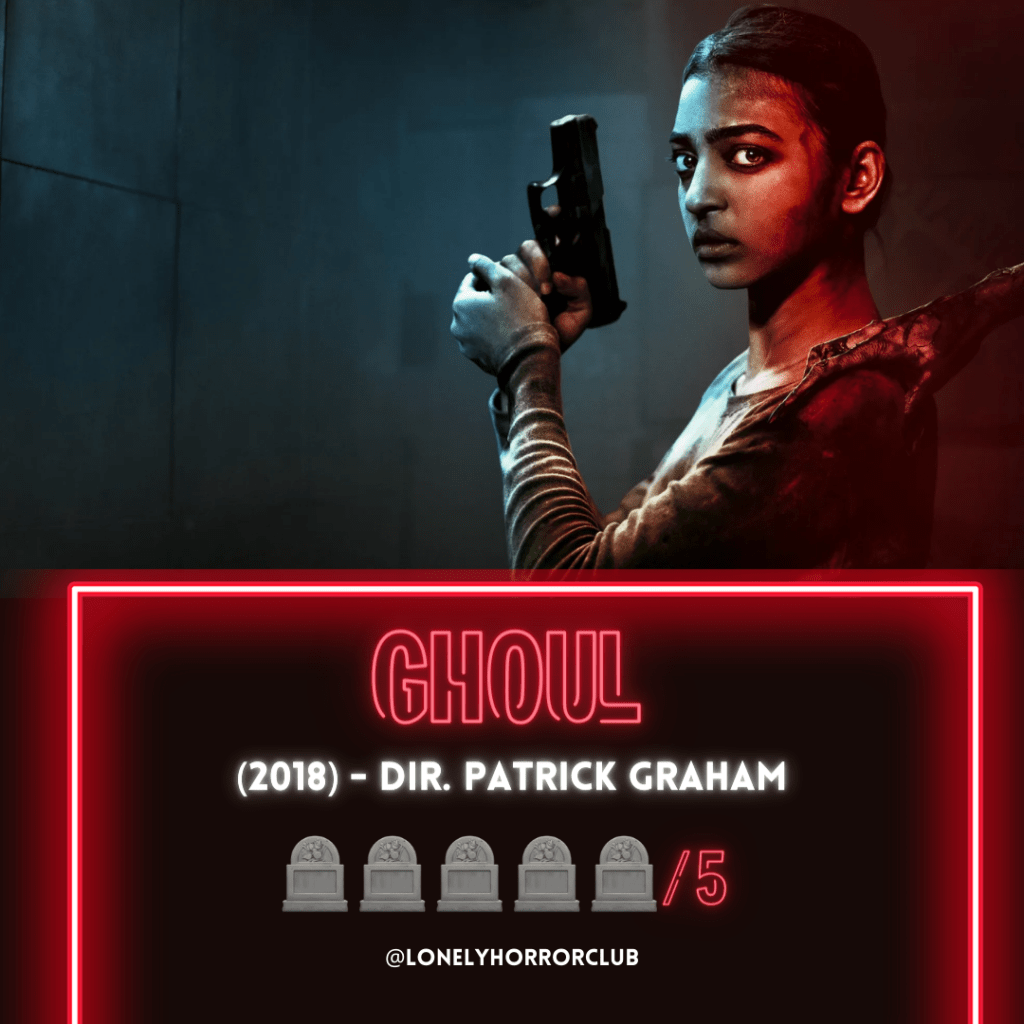
Dir. Patrick Graham | Now Streaming On: Netflix | Rating: 5/5
I came across the miniseries Ghoul while looking for a new horror series to start. With only three 45 minute parts, this miniseries feels more like a movie than a series. The sociopolitical possession story is fresh, engaging, and incredibly relevant.
The core of Ghoul is a critique of government power and how power is often used as a crutch for people with cruel intentions. We see this theme through the entire cast, with each of them grappling with their own belief systems in context of the fascist regime. Sometimes political commentary can feel heavy handed, but in Ghoul, it unravels itself so subversively it’s easier to stomach.
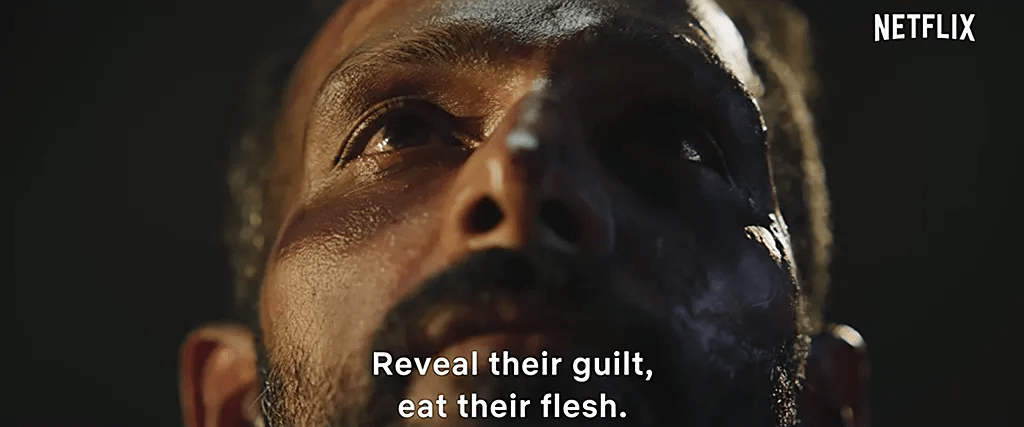
This miniseries also serves as a much needed lens on Arabic mythology and folklore, through the existence of the titular character – the ghoul. The ghoul originates in the Islamic hadith as a monster that stalks the living to eat their flesh. In this series, the ghoul is able to assume the identity of any person it eats. This is all a very clever juxtaposition to the dystopian military regime portrayed in the show. Isn’t that the way of the military? Brainwashing recruits and society, consuming the beliefs and systems we have, until we abide by what it wants – whether we agree with it or not.
We have a layered idea of what is scary in Ghoul. We have our surface level demonic entity, wreaking havoc on this military compound. But we also have this dimension of corruption, power, and manipulation by military force that is the harsh and terrifying reality for many – and a plausible future for most of us.
Intriguing and complex enough to keep your attention, but not too weighty that it can’t be understood. Ghoul is an absolute unsung gem of the current Netflix catalog and definitely one to add to your watchlist.
Know Before You Watch: Features death, gore, flashing lights.

 Lonely Horror Club