
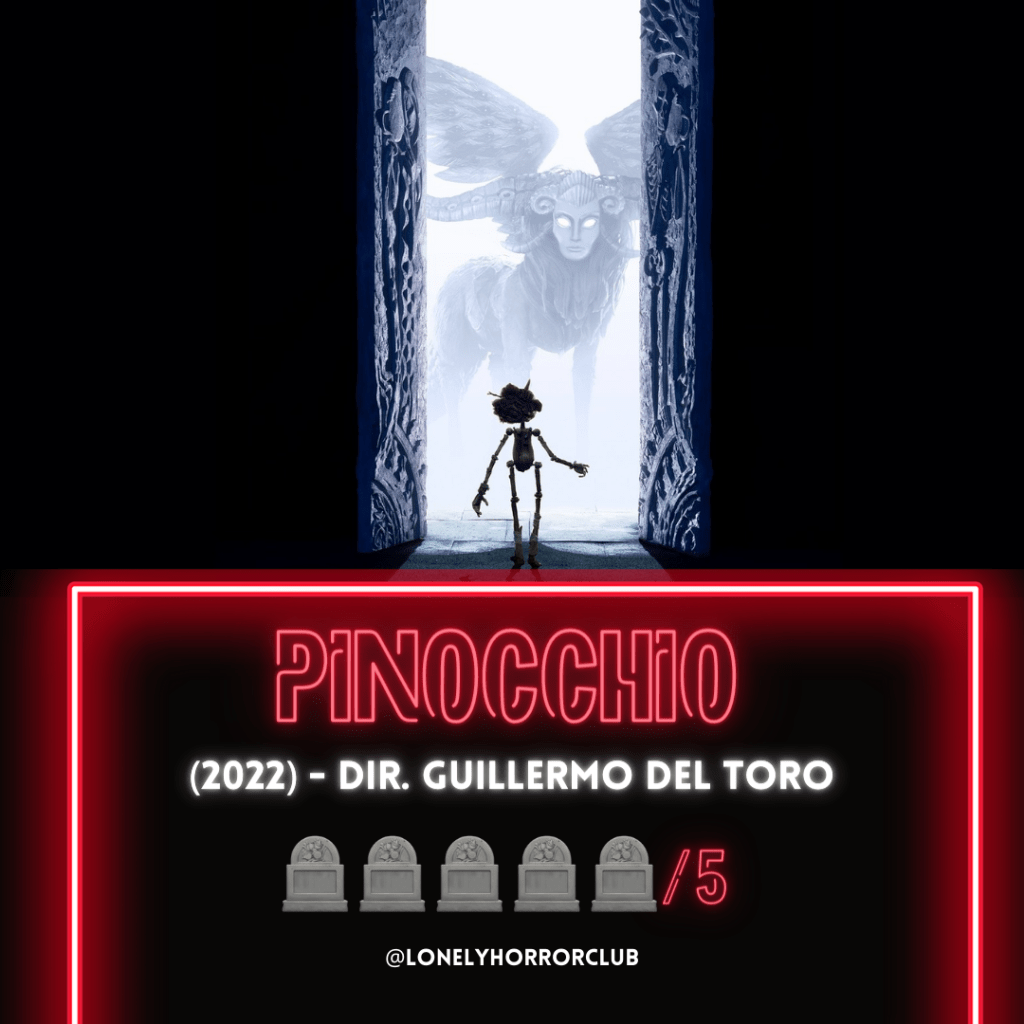
Dir. Guillermo Del Toro | Now Streaming On: Netflix | Rating: 5/5
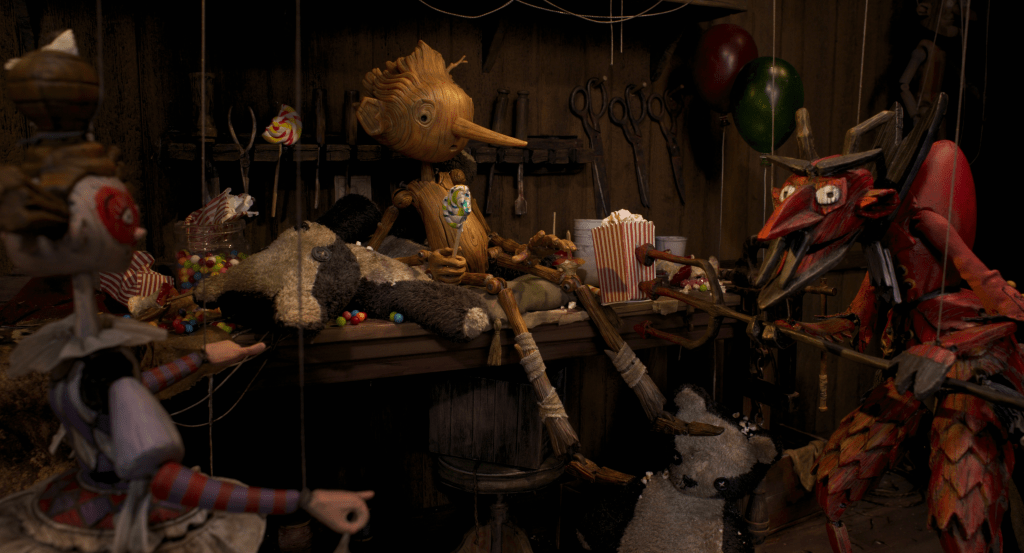
But Lonely, I thought you only reviewed horror movies? Yes, well you know what’s horrifying? Biblically accurate angels, fascism, and the crippling weight of realizing you and everyone you love will inevitably die.
Let’s talk about Guillermo del Toro’s Pinocchio. Del Toro is a master storyteller and Pinocchio encapsulates the dark fantasy and whimsy he is known for. This retelling is not for the faint of heart, as it delivers a sucker punch of reality, grappling with the weight of death, grief, and human nature.
This dark version of the classic child’s fairytale oozes with spiritual undertones, as Pinocchio transitions between the land of the living and the dead. We see depictions of Catholicism and the reimagined Blue Fairy as cosmic horrors called “Wood Sprites.” Pinocchio appeals to the innate drive we all have, with no conscience or desire to be a “good” boy, just a desire to be loved.
What is a del Toro film without his trademark commentary on the horrors of war? This film is set in Fascist Italy during WWII and rips apart the fear mongering behavior of Mussolini’s followers in a darkly comedic way. This story is not shy about comparing the one-sided thinking of the Nazi party to that of uneducated and naïve children, amused by puppets on a stage.
The core of this story is a hard to swallow commentary on death and mortality. To quote the Wood Spirit, “What makes mortality so special, is that any moment you spend with someone could be your last.” The end of this movie had me full on ugly sobbing on New Year’s Eve. Pinocchio’s desire to give and receive love drives him to death multiple times in the film’s run until he realizes the precious nature of human life.
This film is beautifully made and raw. This may not be your “typical” horror film – but it is a poignant commentary on our own mortality. And isn’t that the root of the horror genre? The lengths we go to avoid our fear of death?
Know Before You Watch: Features death.

 Lonely Horror Club