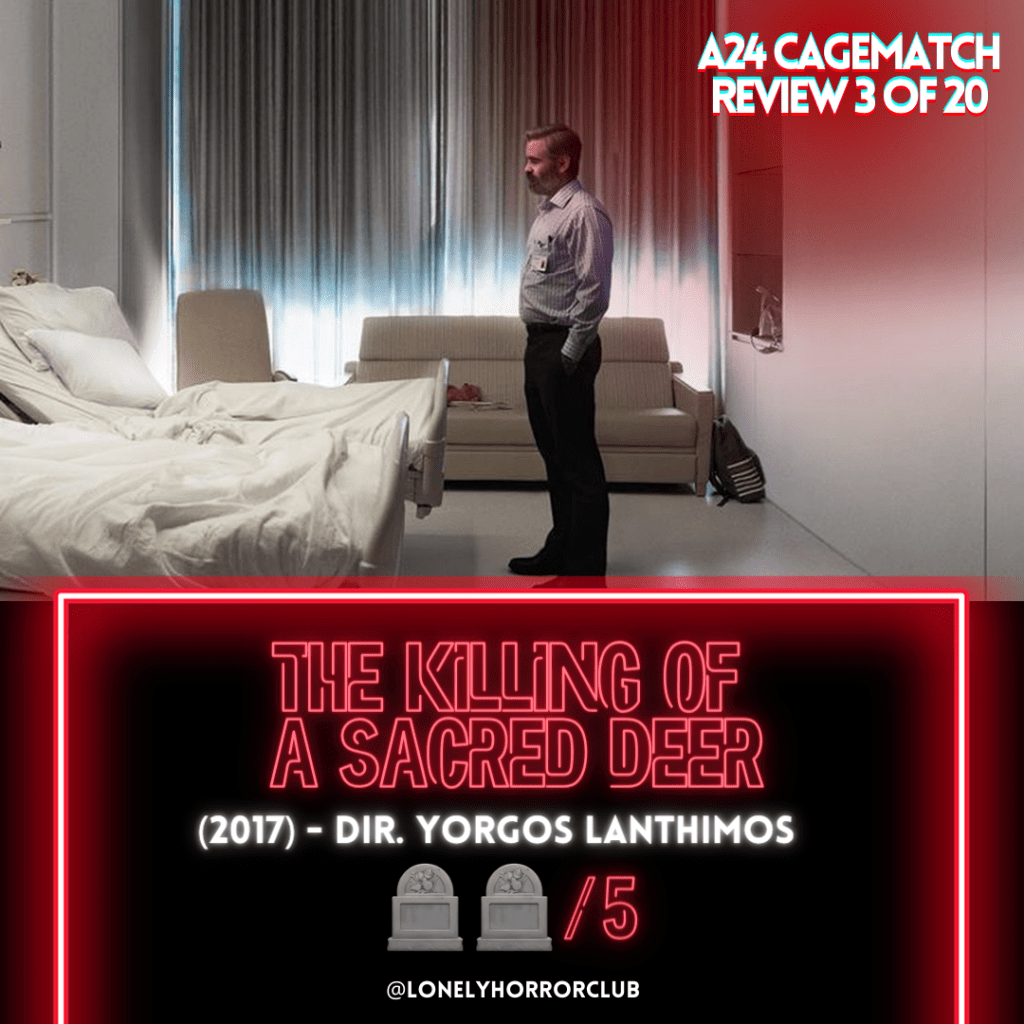
Dir. Yorgos Lanthimos | Now Streaming On: Paramount+ | Rating: 2/5

After watching several hundred horror films, I shouldn’t have to read a Roger Ebert essay to understand what I just watched. And unless you all are sitting on some literature or anthropology degrees, I’m not buying you got this either.
I put off watching The Killing of a Sacred Deer for a long time. Its run time and vague synopsis kept me at an arm’s length. After watching it, that’s where I’m staying.
According to our pal Roger, Sacred Deer is a retelling of the Greek tragedy “Iphigenia at Aulis.” In the tragedy, a general kills Artemis’s sacred deer and must sacrifice his daughter in return, or pay the price. It has been over a decade since I read The Odyssey, so maybe this is a “me problem.”
This is well acted and beautifully shot. The sound design in this is also impressive, especially in its ability to enhance the dread and otherworldly feeling. But Sacred Deer loses itself in clunky writing and ambiguity. This script felt so sterile and bizarre. Sure, the story is atmospheric and dread inducing, but the viewer has no idea why they feel this way. This film refuses to explain itself and shows the average viewer very little to help them piece it together themselves.
The scares in this are minimal and psychological. Though there are some atrocities of human nature, especially as our main family begins to unravel, I wouldn’t chalk these up to anything that will give you nightmares. At the surface, it’s a commentary on retribution, fate, and “cosmic responsibility.” I’m not sure where all of the menstruation and masturbation talk fit into this lofty rhetoric, but I digress.
This is a perfect example of how arthouse fails itself. Sure, technically this movie is stunning. But if no one can understand what you’re saying, why spend 2 hours and millions of dollars to say it? Because it’s nice to look at? Humbly, that’s not what I feel horror is about. Horror appeals to the fears that we innately have as humans, making this one of the most intellectually and emotionally accessible art mediums in existence. “Elevating” them to a level of intellectualism that makes them inaccessible to most audiences, defeats the purpose of labeling this a horror film.
Know Before You Watch: Features sex, nudity, blood, death, imagery of medical procedures.


 Lonely Horror Club